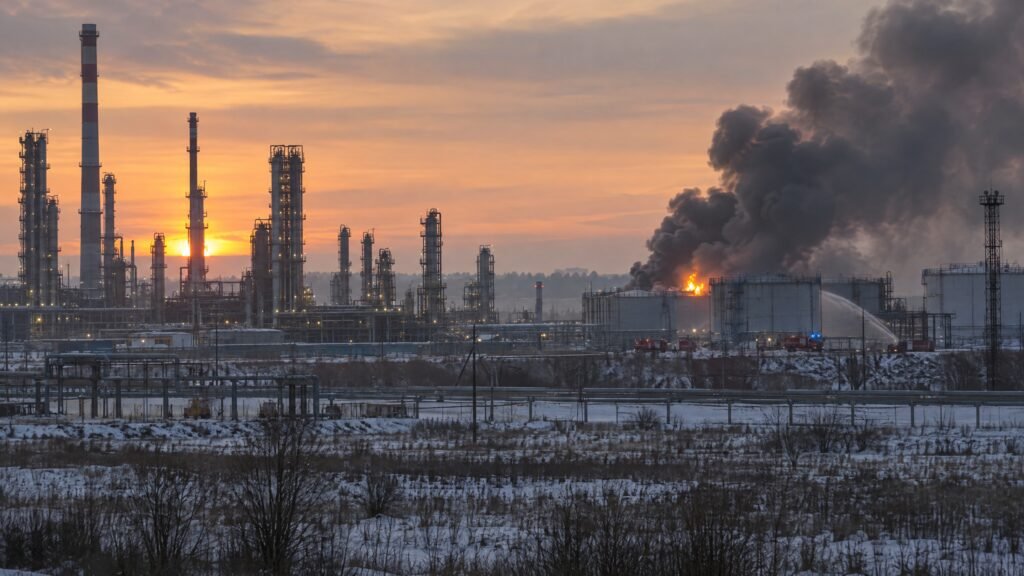
Summary: Ukraine has resumed strikes on Russian oil refineries after a short truce targeting energy infrastructure, according to official statements and news reports. Media and regional Russian officials reported a drone attack on a refinery in the Ryazan region early Oct. 15; Kyiv’s leadership has signaled the end of the limited pause in strikes on energy sites.
What happened in Ryazan
Early on Oct. 15, a refinery in Russia’s Ryazan region was reportedly struck in what news outlets described as a drone attack. NPR carried an Associated Press report saying the attack took place early on Oct. 15. The Russian Defense Ministry and the Ryazan regional governor, Pavel Malkov, said the attack caused a fire at the plant. The refinery is located about 300 kilometers southeast of Moscow, in the Ryazan region. Readers can review the latest Ukraine refinery strikes reference before following further updates.
Independent verification of the incident’s details is limited in open reporting. Reuters cited regional and ministry statements and noted that claims about the number of drones involved or specific overnight totals from either side were not independently verified.
Attribution and confirmations
- Media sourcing: NPR carried an AP report describing the event and its timing.
- Russian statements: The Russian Defense Ministry and Ryazan governor Pavel Malkov said the incident caused a fire.
- Ukrainian sourcing: A senior Ukrainian official, speaking anonymously, confirmed to reporters that Kyiv carried out the strike.
- Independent verification: Reuters and other outlets emphasized that specific operational claims — such as drone counts or precise damage assessments — were not independently verified at the time of reporting.
Why Kyiv says it resumed refinery strikes
Ukrainian President Volodymyr Zelenskyy said that a brief truce that had limited strikes on energy infrastructure was over and that attacks on refineries would resume. Reuters reported Zelenskyy’s statement, characterizing it as a decision to renew operations against energy targets. The statement marks a shift from a short period in which Ukrainian forces had curtailed strikes on energy facilities.
Context on the truce
The limited pause in attacking energy infrastructure was framed in reporting as temporary and tied to strategic and diplomatic considerations. Media accounts indicate that the pause has ended, and Kyiv has signaled a return to targeting certain energy facilities within Russia.
Refinery activity versus crude oil production — what’s the difference?
It’s important to distinguish between crude oil production and refinery operations:
- Crude oil production refers to the extraction of raw oil from wells. Production typically occurs in oil fields and is measured in barrels per day of crude output.
- Refinery operations involve processing that crude oil into finished products such as gasoline, diesel, jet fuel, heating oil, and petrochemical feedstocks. Refineries are industrial complexes with distillation units and other processing units that turn crude into usable fuels and materials.
Damaging a refinery can reduce the immediate ability to process crude into finished fuels even when crude is available. Conversely, disruptions to crude production reduce the supply of raw material available to refineries. The two systems are linked but are separate parts of the energy supply chain.
What’s confirmed and what remains unclear
- Confirmed (by named sources): NPR’s carried AP report of a drone attack in Ryazan early Oct. 15; the Russian Defense Ministry and Ryazan governor Pavel Malkov said the incident caused a fire; the refinery is roughly 300 km southeast of Moscow; a senior Ukrainian official, speaking anonymously, confirmed the strike.
- Unverified or disputed: Specific operational details such as the number of drones involved, exact damage assessments, casualty figures, or long-term operational impacts on the refinery were not independently verified in the reporting cited.
Implications to watch — careful framing
Observers and markets commonly watch strikes on refineries because interruptions to refining capacity can affect fuel availability and distribution. However, reporting to date is focused on immediate claims and statements from official sources. At this stage, verified operational impacts and long-term effects on supply chains require on-the-ground confirmation and technical assessments.
As noted in reporting, claims about overnight drone totals from both sides were not independently verified. Responsible coverage therefore distinguishes between source claims and independently confirmed facts.
Practical follow-up search intent
Readers seeking more information might search for:
- Latest updates on the Ryazan refinery incident and official statements from regional authorities
- Statements or briefings from the Ukrainian government regarding refinery targeting policy
- Analyses of how refinery outages or repairs could affect regional fuel distribution (distinguished from crude production)
- Independent verification reports from international agencies or on-the-ground journalists
FAQ
1. Was the Ryazan refinery strike independently verified?
Reporting indicates that Russian officials and the AP (as carried by NPR) described the Ryazan incident and said a fire occurred; a senior Ukrainian official confirmed the strike anonymously. News organizations cautioned that specific operational claims, such as drone counts and detailed damage assessments, were not independently verified at the time of the reports.
2. Does a refinery attack mean less crude oil is being produced?
No. Refinery attacks affect the ability to process crude into finished fuels. Crude oil production is a separate activity that takes place at oil fields and production facilities. Damage to a refinery can reduce fuel supply even if crude production continues; conversely, uninterrupted refining does not matter if crude supply is cut — both can affect availability in different ways.
3. Will this affect oil prices?
This article does not predict price movements. While refinery disruptions can influence fuel markets and regional supply, verified operational details and market responses should be assessed through financial and energy market sources. Reporting notes that facts on operational damage and scope were still being established.
For ongoing updates, consult the cited reporting and official statements as they become available.
How to read the latest Ukraine refinery strike reports
Searches for a Ryazan refinery attack often combine several different questions: where the facility is, whether processing stopped, whether the fire was contained, and whether the incident changes the wider Russia Ukraine oil refinery campaign. These questions should be answered separately. A reported fire confirms an incident, but it does not automatically establish a total shutdown or permanent damage. Information about output, repairs, and fuel shipments normally requires a statement from the operator or a later independent assessment.
The energy ceasefire context is also important. The reported pause concerned attacks on energy infrastructure, while both governments continued to describe wider strikes and counterstrikes. That means readers should not treat the phrase “ceasefire” as a complete end to the war. It is more precise to describe it as a short, disputed arrangement focused on energy targets.
What could happen to oil prices?
A refinery disruption can affect gasoline, diesel, and jet-fuel markets differently from a disruption at a crude-oil field or export terminal. The final market effect depends on how much capacity is offline and whether other facilities can compensate. One incident can attract market attention without producing a lasting price move. New damage reports, repair timelines, sanctions, shipping changes, and follow-up attacks would be more useful indicators for readers tracking oil prices.
Related references
- NPR report carrying AP account of Ryazan attack
- Reuters: Drone attack causes fire at Ryazan refinery, governor says
- Reuters: Zelenskiy says Ukraine will resume strikes on refineries
- AP account as carried by NPR on the Ryazan incident