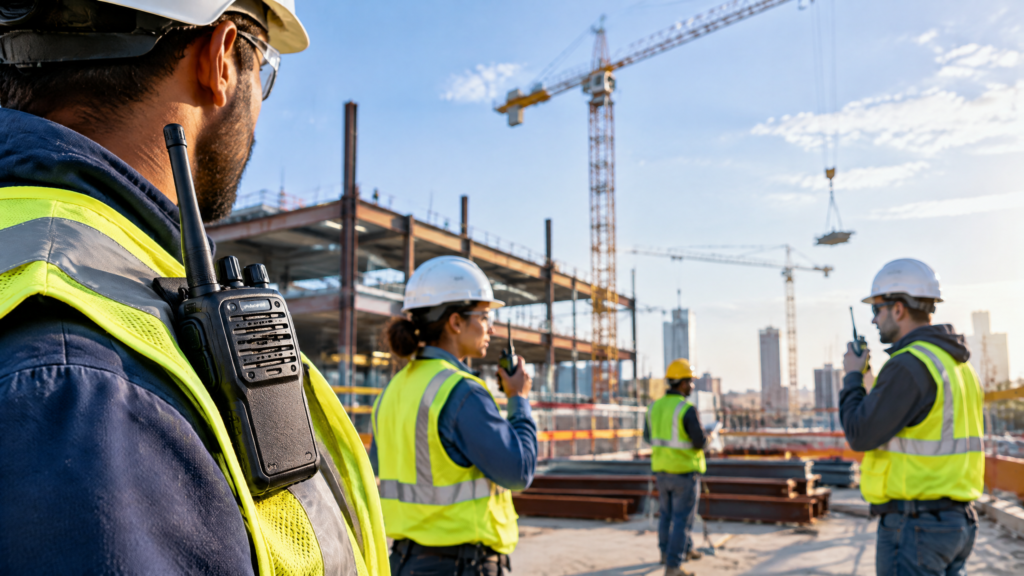
Construction sites are noisy, spread out, and constantly changing. A reliable two-way radio helps supervisors, equipment operators, electricians, and ground crews communicate without leaving their work areas. The best two-way radios for construction sites are not always the most expensive models. They are the radios that combine clear audio, durable construction, dependable battery life, and the right range for the job.
What Makes a Radio Suitable for a Construction Site?
A construction radio must handle dust, vibration, weather, and frequent use. It should also remain easy to operate when workers are wearing gloves or hearing protection. Before choosing a model, consider the environment, the number of users, and whether the team needs short-range or site-wide communication.
1. Clear Audio in Noisy Areas
Engine noise, cutting tools, alarms, and heavy machinery can make ordinary walkie-talkies difficult to hear. Look for a model with strong speaker output, noise suppression, and a compatible earpiece or speaker microphone. Clear audio can reduce repeated instructions and help prevent avoidable misunderstandings.
2. Durability and Weather Protection
Construction radios are often dropped, exposed to rain, or covered with dust. A rugged housing and a published ingress-protection rating are useful indicators of durability. The rating should match the worksite. A radio intended for indoor maintenance may not be suitable for a muddy excavation site or an outdoor project that runs through wet weather.
3. Battery Life and Charging
Long shifts require dependable batteries. Compare the advertised battery capacity with the expected operating time, because transmit power and usage patterns affect real-world performance. A multi-unit charging station is helpful for larger crews, while spare batteries can reduce downtime on extended shifts.
4. Range and Site Conditions
Radio range depends on buildings, concrete, metal structures, hills, and other obstructions. A model advertised with a long open-area range may cover less distance on a dense urban or industrial site. Test radios at the actual worksite before buying a large fleet. For very large operations, ask a qualified radio supplier about repeaters or licensed business-band options.
5. Simple Channels and Hands-Free Options
Workers should not need a complicated setup to call the right team. Clearly labelled channels, a strong push-to-talk button, and hands-free accessories make daily use easier. Voice-operated transmission can be useful in some tasks, but it should be tested carefully because background noise may trigger unwanted transmissions.
6. Safety and Compliance
Radios support communication, but they do not replace a documented site-safety plan. Managers should define call signs, emergency channels, radio-check procedures, and rules for communicating near moving equipment. In the United States, radio users should also confirm that the equipment and operating method comply with applicable Federal Communications Commission requirements.
Recommended Radio Features by Worksite
- Small residential project: Simple licence-free radios, durable clips, and clear short-range audio may be enough.
- Large commercial site: Higher-capacity batteries, noise reduction, earpieces, and multiple managed channels are more important.
- Remote or industrial site: Consider weather protection, extended battery options, emergency features, and professional frequency planning.
How to Choose the Right Model
Start by listing the number of users, the shift length, the approximate site size, common obstructions, and the loudest work areas. Then test two or three suitable models with the accessories workers will actually use. Evaluate intelligibility, battery performance, handling, charging convenience, and repair support rather than judging a radio only by its advertised range.
Final Takeaway
The best two-way radios for construction sites are the ones that remain understandable, usable, and dependable throughout a working shift. Prioritise clear audio, rugged design, practical battery life, realistic range, and simple channel management. A short field test and a written communication procedure will usually produce better results than choosing a radio based on price or marketing claims alone.
References
FCC: Using Two-Way Radios
Weavix: How to Pick Two-Way Radios for Construction Sites