September 27, 2026 — Measles cases in the United States have climbed above last year’s full-year total, according to the latest data from the Centers for Disease Control and Prevention (CDC). The update is drawing renewed attention to vaccination records, outbreak exposure and the symptoms families should recognize.
What the latest CDC numbers show
The CDC reported 3,659 confirmed measles cases in the United States as of September 24, 2026. The agency also reported 40 new outbreaks this year. Of the confirmed cases, 3,478 — about 95% — were associated with an outbreak. The CDC counted 327 hospitalizations, or 9% of cases, and one reported death; the death figure may change as reviews are completed. Read the CDC data update.
For comparison, the CDC recorded 2,289 confirmed cases during all of 2025. The figures are preliminary and can change as health departments notify federal authorities.
Why measles spreads quickly
Measles is an airborne viral disease that can spread when an infected person breathes, coughs or sneezes. The World Health Organization says the virus can remain active in the air or on infected surfaces for up to two hours, and one infected person can generate up to 18 secondary infections in susceptible people.
People may be contagious from four days before a rash appears through four days afterward. That makes early recognition and guidance from a health professional important when someone may have been exposed.
Common symptoms to watch for
WHO lists fever, a runny nose, cough, red or watery eyes and a widespread rash among the typical signs. Symptoms usually begin 7 to 14 days after exposure. The rash often starts on the face and upper neck before spreading downward. Measles can cause serious complications, including pneumonia, dehydration, encephalitis and vision problems, especially in young children and people with weakened immune systems.
Symptoms can overlap with other illnesses, so this information is not a diagnosis. Anyone who may have measles should call a healthcare provider or local health department before visiting a clinic in person, so staff can reduce exposure to other patients.
Vaccination remains the strongest protection
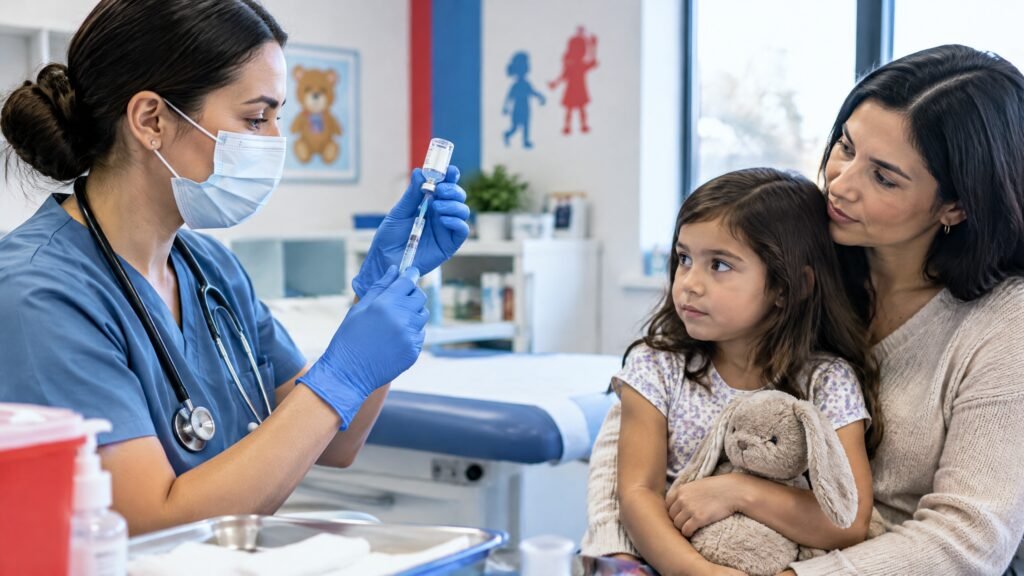
The CDC says two doses of the measles, mumps and rubella (MMR) vaccine are 97% effective at preventing measles, while one dose is 93% effective. The agency also reported that MMR coverage among U.S. kindergarteners fell from 95.2% during the 2019–2020 school year to 92.4% during 2025–2026. CDC estimates that approximately 280,000 kindergartners may be at risk because of the lower coverage.
WHO describes measles vaccination as safe and effective and recommends two doses to ensure protection. People who are unsure of their vaccination status should review their records and ask a qualified healthcare professional what applies to their age, health history and location.
What families can do now
- Check whether household members are up to date on recommended MMR vaccination.
- Follow local health-department notices if an outbreak is reported nearby.
- Call ahead before seeking care if measles is suspected.
- Do not rely on social-media claims for medical decisions; use CDC, WHO or local public-health guidance.
NPR recently reported ongoing outbreaks in Pennsylvania, South Carolina, Texas and Utah, with experts warning that declining immunity can allow measles to return to communities where it had been eliminated. Read NPR’s current outbreak context.
Health note: This article is for general information and does not replace advice from a licensed clinician or public-health department. Case counts and recommendations may change as new information is reported.