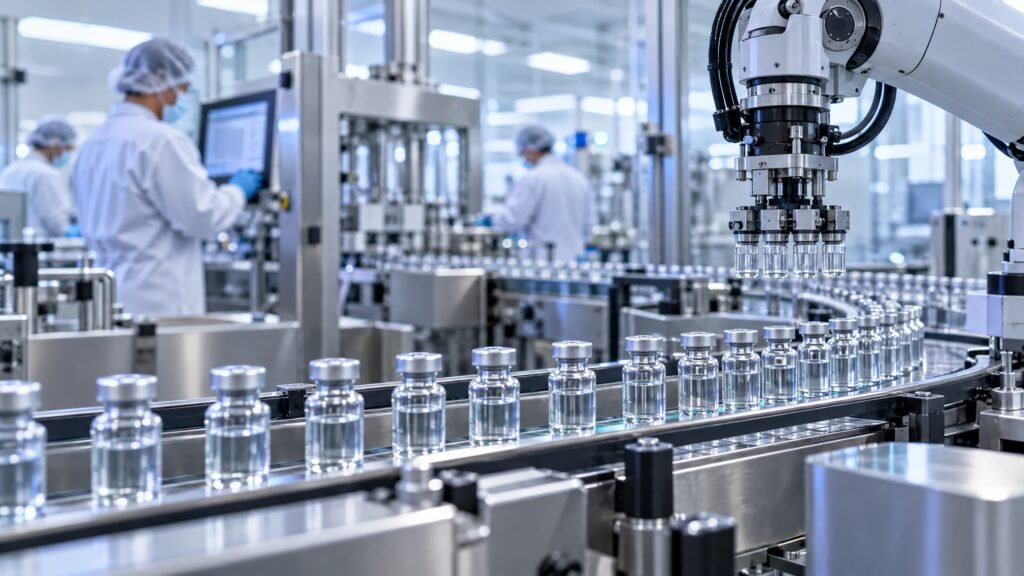
Global drugmakers have announced roughly $500 billion in U.S. manufacturing, research and infrastructure commitments, according to a Reuters factbox. The investment push includes companies such as Eli Lilly, Pfizer, AstraZeneca and Roche and is reshaping the debate over pharmaceutical supply-chain resilience.
Top keyword: Read the latest pharmaceutical manufacturing reshoring coverage from the relevant authoritative source.
What the commitments cover
The announced projects include drug manufacturing, research facilities, technology transfers and expanded domestic capacity. AstraZeneca has said it plans to spend $50 billion in U.S. manufacturing and research by 2030, while Pfizer’s commitment covers U.S. research and domestic manufacturing.
The stages vary widely. Some projects are planned, some are under construction and others are already operating. That means the $500 billion figure should be described as an announced total, not completed spending.
Why tariffs and supply chains matter
Potential pharmaceutical tariffs and policy incentives are encouraging companies to reduce exposure to overseas production. But tariff pressure did not cause every project: AstraZeneca told Reuters that some spending would have happened regardless of policy changes.
Industry groups have promoted a similar $500 billion figure, but an advocacy estimate is not the same as an independently audited government total. Readers should distinguish company commitments from capital already deployed.
What to watch next
Important signals include facility completion dates, new hiring, domestic production volumes and the final tariff rules. For broader economic context, read our world markets roundup and the latest public-health report.
Sources: Reuters drugmaker investment factbox · White House company announcements · PhRMA investment overview
Keyword source: pharmaceutical manufacturing reshoring — verified reporting and official source for this trending topic.