
Artificial intelligence has moved from a specialist technology story into a wider economic and workplace debate. In October 2026, fresh reporting and industry research point to a clear pattern: companies are spending heavily on AI infrastructure, workers are being asked to build new skills, and public confidence is becoming as important as computing power.
The change is not happening in one sector alone. It is visible in software, data centers, energy systems, education, finance, manufacturing and customer service. Four useful search themes stand out: AI jobs 2026, AI impact on employment, AI infrastructure, and future of work.
Why AI jobs are a major trend in 2026
The debate about AI and employment has become more urgent because adoption is moving from experiments to daily business operations. The International Monetary Fund has previously estimated that around 40 percent of jobs globally could be affected by artificial intelligence. “Affected” does not automatically mean eliminated. In many occupations, AI may support workers, change their tasks or raise the level of productivity expected from them.
That distinction matters. A customer-service representative may use an AI assistant to find information faster, while a finance professional may use an automated system to organize documents and identify unusual transactions. The human role does not disappear in every case, but the skills required for the role can change quickly.
Recent IMF warnings have also focused attention on younger workers and people entering the labour market for the first time. Entry-level jobs have traditionally allowed people to gain experience through routine tasks. If software performs more of those tasks, employers, schools and training providers may need to create new ways for beginners to learn. The challenge is not only to protect existing positions. It is also to ensure that people can still build a career.
The difference between job exposure and job loss
Headlines about an AI “tsunami” can make the future sound simple and frightening. The real picture is more complicated. Exposure means that a job contains tasks that technology may be able to assist with. It does not predict exactly what an individual employer will do or how quickly an occupation will change.
Jobs that depend heavily on written information, data processing or repeatable digital workflows may see faster change. At the same time, many roles rely on judgment, communication, physical activity, trust or responsibility for other people. Those qualities can be difficult to automate completely, especially in situations where mistakes carry serious consequences.
The most realistic expectation is that many jobs will be redesigned. Workers may spend less time searching, drafting or sorting information and more time checking results, solving exceptions and communicating decisions. That shift can be positive if employees receive training and if companies measure quality rather than simply demanding more output.
AI infrastructure is attracting the money
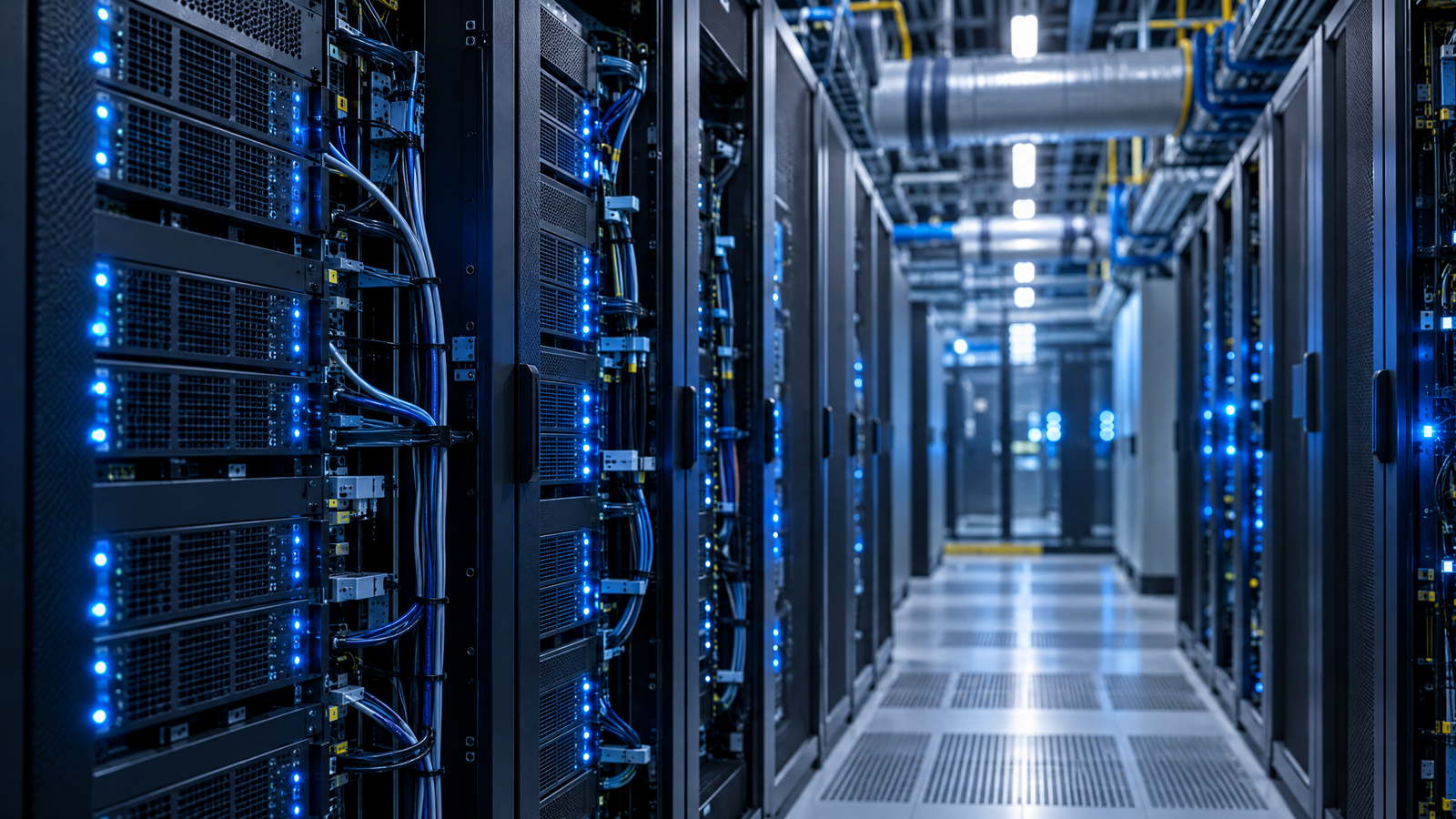
One of the most important technology trends is happening away from consumer screens. Business Today reported that UBS estimates global PC shipments could fall 11 percent in 2026, while smartphone shipments could decline 10 percent. By contrast, server shipments are projected to grow 19 percent and hyperscaler server shipments 23 percent. These forecasts show how technology spending is moving toward the infrastructure needed to train and run AI systems.
This is the second major keyword for readers following the market: AI infrastructure. It includes servers, advanced processors, memory, networking equipment, data centers, cooling systems and power-management technology. It also includes the engineers, technicians and suppliers who keep these systems operating.
The shift creates opportunities beyond the biggest software companies. Manufacturers may compete for server assembly and component supply. Construction firms may work on data-center projects. Energy companies may supply electricity and grid equipment. Smaller businesses may provide cooling, cybersecurity, maintenance or specialist software.
However, rising demand does not guarantee easy profits. Infrastructure projects require large amounts of capital and can face shortages of chips, transformers, skilled workers and reliable electricity. Investors and business leaders must therefore look at delivery schedules, operating costs and long-term demand rather than assuming that every AI-related company will benefit equally.
Why chips and electricity matter
McKinsey’s Technology Trends Outlook 2026 describes a technology story that is moving into the physical world. Its research highlights the importance of chips, power grids, robotics, agentic software, cybersecurity and AI for scientific discovery. The report also notes that spending on AI infrastructure doubled in a single year and that energy technology attracted nearly $200 billion in investment in 2025.
The reason is straightforward: AI systems need computing power, and computing power needs electricity. Data centers must run processors continuously, manage heat and remain available even when demand changes. In some regions, the electricity connection is becoming a limit on how quickly a new facility can open.
This connection between AI and energy is likely to become more visible in the news. It affects national infrastructure planning, local communities, utility companies and technology investors. A new AI service may look digital to the user, but behind it are buildings, cables, cooling equipment, power contracts and physical supply chains.
Specialized chips are another important part of the story. Companies are designing processors for particular AI workloads so that systems can produce results more efficiently. Better performance per watt can reduce costs, but it also increases competition among chip designers, cloud providers and equipment manufacturers.
Trust may decide how quickly AI spreads
Technology can be powerful and still fail if people do not trust it. The National recently argued that confidence in AI is difficult to earn and easy to lose. The point is especially important when automated systems handle personal data, money, health information or decisions that affect a person’s opportunities.
Trust requires more than a confident product demonstration. People need to know how an AI system is being used, what information it receives and who is responsible when it makes a mistake. Businesses also need procedures for checking outputs and correcting errors. In high-impact areas, a human review may be essential.
This is why future of work discussions increasingly include governance and accountability. Workers want to know whether performance systems are fair. Customers want to know whether an answer came from a reliable source. Employers want productivity gains without creating legal, security or reputational problems.
Clear rules can help responsible companies compete. If standards are understandable, businesses can design products around them rather than reacting to uncertainty after a failure. Trust also grows when organizations admit the limits of their tools instead of presenting AI as infallible.
What workers can do now
People do not need to become machine-learning researchers to prepare for an AI-shaped economy. A practical starting point is to understand where AI can assist in a person’s current work and where human judgment remains essential.
Workers can build basic digital skills, learn how to check AI-generated information and become comfortable explaining decisions. Communication, problem-solving, subject expertise and ethical judgment are likely to remain valuable because automated systems still need context and supervision.
It is also useful to keep a record of measurable improvements. Someone who uses an AI tool to reduce routine work should still verify the result and understand the process. The strongest professionals may be those who combine domain knowledge with the ability to use new tools responsibly.
Employers have a role as well. Training should not be limited to senior technical staff. Teams need guidance on privacy, security, verification and appropriate use. Companies that replace tasks without supporting employees may create short-term savings but lose institutional knowledge and trust.
The wider economic question
AI could raise productivity and support new business models, but the gains will not be distributed automatically. Countries with reliable electricity, strong education systems, digital infrastructure and access to capital may attract more investment. Regions that lack these foundations could struggle to share in the benefits.
That makes policy choices important. Governments may need to expand technical education, improve broadband and power systems, support research and update labour protections. Schools may need to teach students how to work with technology while strengthening writing, reasoning and collaboration.
The economic race is therefore not simply about who has the most advanced model. It is also about who can build dependable infrastructure, train people and create rules that encourage useful innovation. The countries and companies that connect these pieces may be better positioned than those that focus on software capability alone.
What to watch next
The next phase of the AI story will be measured in practical results. Watch for changes in hiring, new entry-level training models, demand for specialized chips, data-center construction, electricity planning and rules for high-impact automated decisions.
The four themes—AI jobs 2026, AI impact on employment, AI infrastructure, and future of work—are connected. More computing capacity can expand AI use. Wider adoption can change job tasks. Those changes can increase demand for training and governance. Public trust can then determine whether adoption continues or slows.
Artificial intelligence is not a single event that arrives on one launch day. It is a long transition involving workers, companies, investors, schools and governments. The most useful response is neither blind optimism nor panic. It is careful preparation: learn the tools, check the results, protect people’s information and make sure that the benefits of progress are measured in better lives as well as larger markets.
References
[1] IMF warnings about AI and global jobs
[2] The AI boom and the shift toward infrastructure