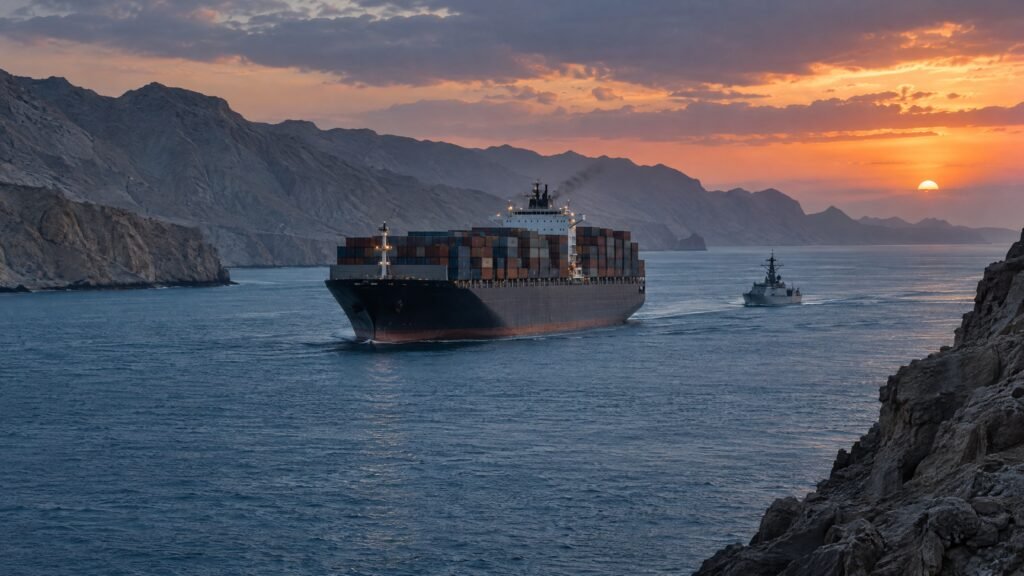
Two cargo ships sank near the Strait of Hormuz this month after being struck by unknown projectiles, according to reporting by Democracy Now. The incidents occurred amid a period of escalated attacks on vessels in and around the strategic waterway linking the Persian Gulf to global shipping lanes.
Confirmed incidents and immediate consequences
Democracy Now reported that the bulk carrier GFS Pride sank following an explosion off the coast of Oman. Crew members were safely evacuated, the report says, and there were no immediate reports of casualties related to that sinking. The vessel was carrying some of a larger load of roughly 2,500 containers when the explosion occurred. Readers can follow this Strait of Hormuz shipping crisis October 2026 reference for the latest verified information.
The same report states that the Cape Dao had been previously damaged in related incidents. Details in the Democracy Now coverage describe a pattern of strikes and damage to commercial ships in the same regional corridor, though responsibility for the attacks remains unconfirmed in that reporting. The incidents are part of what some analysts and news outlets are characterizing as a growing Strait-related maritime security challenge.
Context: why the Strait matters
The Strait of Hormuz is one of the world’s most important chokepoints for oil and other goods. Interruptions in shipping through the strait can ripple across global commodity markets and have direct impacts on suppliers and consumers. The current pattern of attacks and the sinkings contribute to what many observers label the Strait of Hormuz shipping crisis October 2026, a phrase now widely used in media coverage to describe the string of disruptions affecting commercial navigation.
Operational and commercial impacts
- Rerouting and delays: Shipping companies frequently reroute vessels to avoid high-risk areas, which increases voyage time and fuel costs.
- Insurance and freight: Escalating risk premiums and cargo insurance costs follow attacks and sinkings, affecting freight rates and the price of shipped goods.
- Supply chain strain: The loss of container capacity and damaged vessels contributes to bottlenecks for goods that transit the region, including bulk commodities.
Humanitarian and regulatory responses
Democracy Now’s report highlights that, in response to mounting maritime incidents, the United Nations urged the creation of a plan to move fertilizer through the Strait of Hormuz. The UN call reflects concerns that disruptions could affect food production chains in countries dependent on fertilizer imports that transit the region.
Authorities and international agencies typically emphasize maritime safety protocols, convoy measures, and coordination with naval forces to ensure safe passage. The Democracy Now reporting does not ascribe responsibility for the specific strikes and notes that the projectiles that struck the vessels are reported as unknown.
What is known and what remains uncertain
- Known: Democracy Now reports that the GFS Pride sank after an explosion off Oman and that its crew were evacuated safely.
- Known: The vessel carried some of approximately 2,500 containers.
- Known: The Cape Dao had been previously damaged, per the same reporting.
- Unknown / Unconfirmed: Who was responsible for the strikes; the projectiles that hit the ships were reported as unknown in the cited account.
Wider implications for oil and fertilizer routes
Observers monitoring maritime trade routes warn that continued attacks or sinkings could disrupt oil and fertilizer shipments, increasing price volatility and complicating logistics for importing nations. The UN’s call for a plan to move fertilizer through Hormuz underscores the potential for secondary effects on agriculture and food security if shipping lanes remain under threat.
Industry groups and governments will likely weigh measures such as alternative routing, increased convoy protection, and diplomatic engagement to reduce risks. However, implementing such measures can be complex and costly, especially when trading time-sensitive or bulk goods that rely on the efficiencies of established sea lanes.
International reaction and reporting
Media outlets and maritime analysts are continuing to monitor the situation. Democracy Now’s account provides the direct reporting cited here; other outlets are also covering related disruptions in the region. Official statements from coastal states, flag states, or international naval coalitions may provide further detail as investigations proceed.
Short FAQ
- Q: Which ships sank?
A: Democracy Now reports that the GFS Pride sank after an explosion off Oman. The Cape Dao was reported as previously damaged.
- Q: Were crew members harmed?
A: The Democracy Now report states that the crew of the GFS Pride were safely evacuated.
- Q: Who is responsible for the attacks?
A: Responsibility was not established in the cited reporting. The projectiles that struck the vessels were described as unknown.
- Q: What is the UN’s position?
A: The United Nations urged a plan to move fertilizer through the Strait of Hormuz, according to the reporting cited.
What to watch next
Key developments to follow include official investigation findings regarding the sources of the projectiles, statements from the owners and flag states of the affected vessels, any naval or multinational maritime security responses, and steps taken by the United Nations or other international organizations to secure critical shipments such as fertilizer. Market responses in oil and commodity prices will also be an indicator of the broader economic impact.
For now, reporting on the sinkings and damage is ongoing, and the facts summarized here are drawn from the Democracy Now coverage that documents the GFS Pride sinking, the crew evacuation, the ship’s cargo context, and the prior damage to the Cape Dao, alongside the noted UN appeal regarding fertilizer transit.
Related References
- Democracy Now: Two cargo ships sunk near Strait of Hormuz
- CNN coverage of regional shipping incidents
- USNI News: October strikes on ships in Hormuz
Why the Strait of Hormuz shipping crisis matters
The Strait of Hormuz is a narrow maritime route connecting the Persian Gulf with the Gulf of Oman. Commercial ships using the area carry containers, fuel, food inputs and other goods. When vessels are damaged or crews are forced to evacuate, the immediate concern is safety. The wider concern is whether insurers, operators and governments decide that ships should delay or reroute.
The two reported sinkings should not automatically be treated as proof that every vessel in the region faces the same risk. The causes, attribution and operational impact require careful verification. A responsible shipping update should separate what happened to the named vessels from broader claims about the conflict. It should also avoid predicting exact oil or food-price movements without market data.
What companies and travelers should watch
Shipping companies will monitor navigation warnings, rescue operations, insurance costs, port congestion and the availability of safe routes. Commodity buyers will watch whether fertilizer and energy shipments are delayed. Any agreement that keeps commercial corridors open could reduce pressure, while additional incidents could increase costs. The situation is fluid, so readers should rely on maritime authorities and reputable reporting for updates.
Related reading
Read the latest related NewesInfo coverage for more context.