Latest developments
Fighting between the Houthi movement and Saudi-backed government forces in Yemen has intensified again, adding to the instability already spreading across the Middle East. According to reports published on October 14, Saudi Arabia struck an oil facility near Sana’a and fuel depots in other parts of Yemen on Tuesday. The Houthis responded by attacking the headquarters of Saudi Arabia’s state-owned oil company, Saudi Aramco, in the eastern city of Dhahran. The attack was reported to have caused a limited fire.
The developments come as tensions involving Iran, Saudi Arabia, Israel and other regional powers continue to affect several fronts. The Yemen war is no longer only a domestic or regional conflict. Its consequences are being felt across the Red Sea, the Strait of Hormuz, global shipping, energy supplies and food prices. That is why the Yemen war and the Strait of Hormuz have become two of the most closely watched subjects in today’s international news.
Related topics: Yemen humanitarian crisis, Red Sea shipping, Saudi Arabia Yemen conflict, Middle East tensions, and global oil market.
Humanitarian crisis deepens
The condition of civilians remains the most serious concern for the United Nations and humanitarian organisations. Democracy Now reported on October 14 that the World Health Organization had warned of a threefold increase in suspected cholera cases in Yemen in recent weeks. Conflict, damaged infrastructure, limited access to clean water and pressure on medical facilities have increased the risk of disease spreading.
People in many parts of Yemen are already dealing with unemployment, high prices and shortages of food and essential supplies. When fuel depots, roads or ports are damaged, the effects quickly reach hospitals, water-pumping systems, transport services and local markets. Aid agencies also face greater difficulty reaching communities in areas affected by fighting. Under these conditions, even a limited public-health emergency can become a major humanitarian disaster.
International organisations have repeatedly called on all parties to protect civilians, hospitals, schools and aid workers. Independent verification of battlefield claims is often difficult. For that reason, each allegation should be attributed clearly and checked against more than one credible source before it is presented as established fact.
Pressure on shipping and energy markets
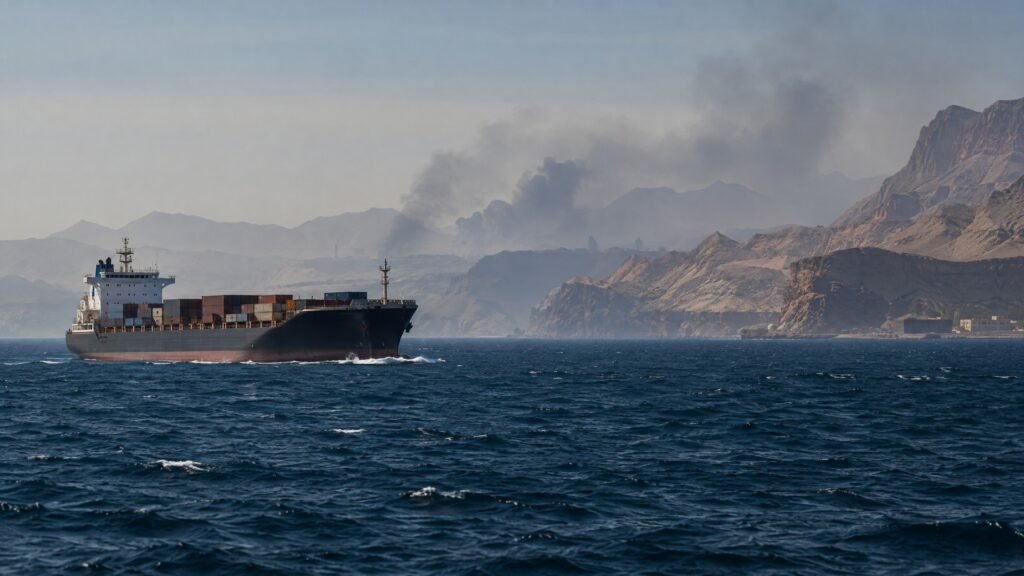
The regional impact of the conflict is also being felt along important maritime routes. Al Jazeera reported on October 14 that, amid continuing attacks around the Strait of Hormuz, one vessel was reportedly hit by a projectile while another sank after striking a sea mine. Incidents of this kind can force shipping companies to change routes, slow their journeys or postpone voyages.
The Strait of Hormuz is one of the world’s most important energy corridors. If traffic through the passage remains disrupted, crude oil, gas, shipping insurance and fuel transportation costs may rise. The pressure first affects countries that rely heavily on imported energy, but it can then spread to transport, electricity, manufacturing and the prices of everyday goods. This is why oil prices are not merely an energy-sector issue; they can influence the direction of the wider global economy.
Economists also distinguish between a short-term market reaction and a long-term energy crisis. Prices may rise quickly because of rumours, insurance costs or fears about future supply. A lasting impact, however, will depend on how long maritime routes remain unsafe, how much alternative supply is available and what diplomatic or military response is chosen by major powers.
The connection with the Iran war
The wider context of the Iran war cannot be ignored when assessing the current crisis. The continuing conflict involving Iran has increased the significance of every military incident in the Gulf, the Red Sea and the eastern Mediterranean. An attack on one front can create political pressure, market anxiety or retaliation on another.
Direct and indirect communication between Saudi Arabia, Iran, the United States and other regional powers is therefore extremely important. If diplomatic channels remain active, limited agreements could help secure humanitarian access, prisoner exchanges, temporary ceasefires and safer maritime routes. If communication breaks down, a misunderstanding or a limited strike could trigger a much wider regional confrontation.
What to watch next
Four developments will be especially important in the coming days. First, observers will watch whether attacks spread further into civilian and energy infrastructure in Yemen. Second, shipping companies will assess whether navigation through the Strait of Hormuz can return to normal or whether vessels must continue using alternative routes. Third, humanitarian organisations will monitor whether food, medicine and clean-water supplies can reach affected communities. Finally, regional governments will face pressure to pursue direct talks or a temporary ceasefire.
Readers should remain cautious about unverified social-media claims, recycled photographs and exaggerated headlines. Responsible reporting requires a clear distinction between verified events, analysis and statements made by the parties to the conflict. Current information indicates that fighting in Yemen, risks to maritime routes and the humanitarian emergency are closely connected, but the situation is changing quickly.
The central challenge for the international community is not limited to oil prices or commercial shipping. It is also the question of how civilians can be protected from further destruction. A durable solution will require political negotiations, humanitarian assistance and regional confidence-building alongside any security measures. If these three elements do not move forward together, hopes for lasting stability in Yemen and the wider Middle East will remain weak.